
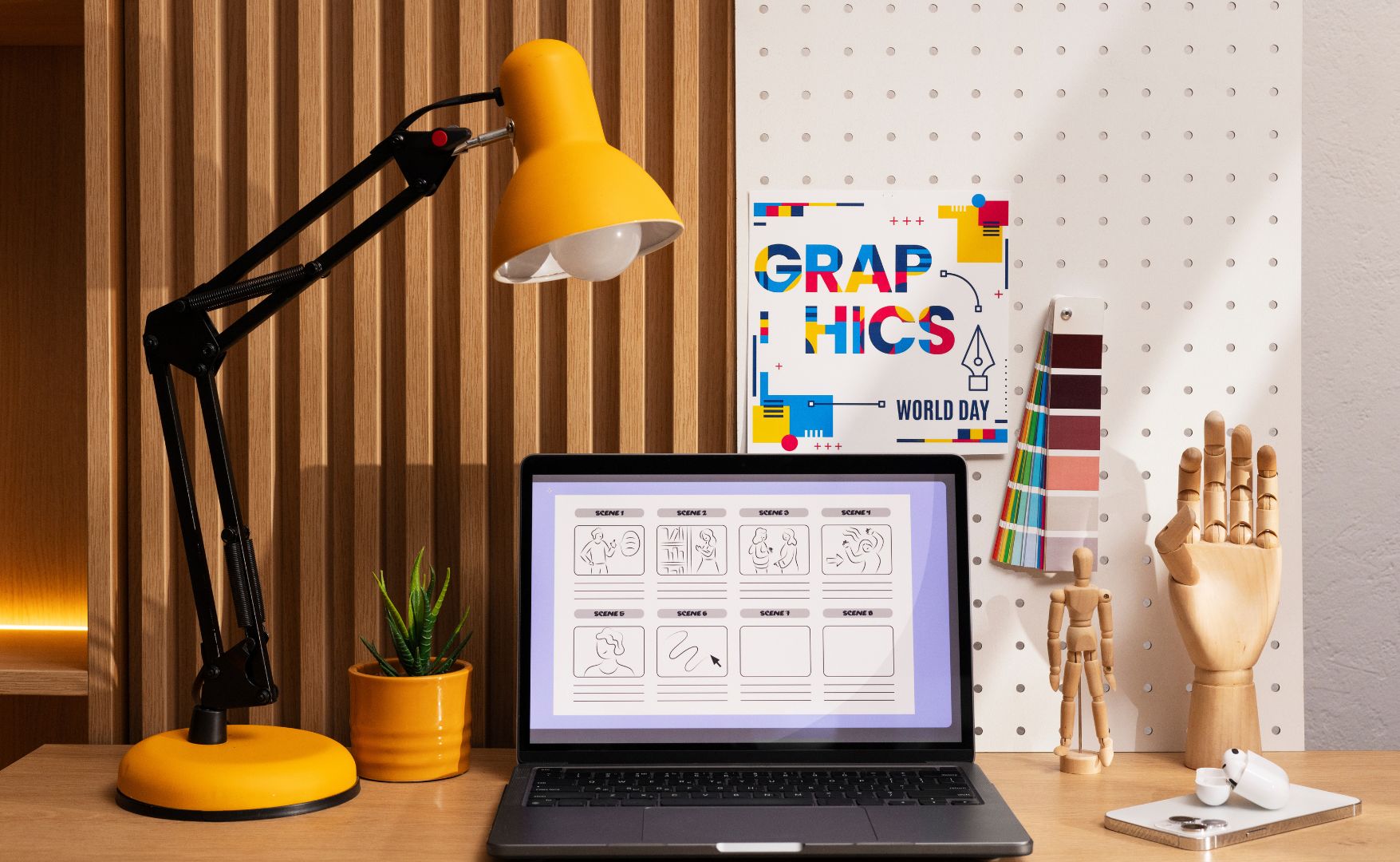
Creative block is one of the most frustrating challenges designers face, staring at blank screens while deadlines loom and clients wait for innovative concepts. Finding fresh inspiration and generating original ideas consistently separates successful designers from those who struggle. The graphic design ideas generator GFXDigitational represents a modern approach to overcoming creative obstacles, combining systematic techniques with digital tools to spark imagination and produce compelling visual concepts. This comprehensive guide explores proven strategies for generating endless design ideas and maintaining creative momentum.
Understanding the Creative Process
Creativity doesn’t emerge from nothing it results from combining existing knowledge, experiences, and influences in novel ways. Many designers mistakenly believe they must wait for inspiration to strike rather than actively cultivating it through deliberate practices. Understanding how creative thinking works helps you develop reliable methods for generating ideas on demand rather than depending on unpredictable moments of inspiration.
The creative process typically moves through distinct phases including preparation, incubation, illumination, and verification. During preparation, you gather information, explore references, and immerse yourself in the project context. Incubation happens when your subconscious processes this information, making unexpected connections. Illumination is that “aha moment” when ideas suddenly emerge, followed by verification where you refine and evaluate concepts.
Many designers rush through preparation, eager to jump directly to creating, but this approach often leads to superficial ideas that lack depth. Spending adequate time researching, analyzing successful designs in your category, understanding audience preferences, and absorbing diverse visual influences provides the raw material your creative mind needs to generate truly original concepts.
Leveraging Digital Tools for Idea Generation
The graphic design ideas generator GFXDigitational approach emphasizes using digital platforms and tools specifically designed to stimulate creative thinking and help designers explore possibilities they might not discover through traditional brainstorming alone. These tools range from AI powered generators to curated inspiration galleries that expose you to global design trends.
Mood board creation tools allow you to collect and arrange visual references that establish aesthetic direction before committing to specific designs. Platforms like Pinterest, Behance, and specialized mood board applications let you gather colors, typography, imagery, and design styles that resonate with your project vision. Organizing these references visually reveals patterns and themes that inform your creative direction.
Color palette generators help you explore harmonious color combinations beyond the obvious choices you might default to instinctively. These tools use color theory principles to suggest palettes that work together aesthetically while offering variations you might not have considered. Experimenting with unexpected color combinations often leads to distinctive designs that stand out from conventional approaches.
Typography pairing tools address one of design’s most challenging aspects by suggesting font combinations that complement each other effectively. Rather than relying on familiar pairings everyone uses, these tools expose you to typeface combinations that create visual interest while maintaining readability and hierarchy. Fresh typography choices dramatically impact overall design originality.
AI powered design assistants now offer suggestions based on project parameters, analyzing successful designs in similar categories and proposing concepts as starting points. While you shouldn’t simply accept AI suggestions without creative input, these tools excel at presenting alternatives you might not have considered, effectively expanding your creative palette.
Systematic Brainstorming Techniques
Beyond digital tools, systematic brainstorming methods help generate ideas through structured processes that prevent mental blocks and encourage divergent thinking. The graphic design ideas generator GFXDigitational incorporates several proven techniques that consistently produce creative concepts when applied deliberately.
Mind mapping starts with your central concept and branches outward, capturing associated ideas, themes, and visual elements as they emerge. This non linear approach mirrors how creative thinking actually works, allowing connections to form organically rather than forcing ideas into rigid structures. Digital mind mapping tools make this process even more dynamic, letting you easily reorganize and expand branches as ideas develop.
The SCAMPER method provides specific prompts that help you examine design challenges from multiple angles. SCAMPER stands for Substitute, Combine, Adapt, Modify, Put to another use, Eliminate, and Reverse each representing a different way to approach your design problem. Systematically asking questions based on each prompt generates fresh perspectives that break you out of conventional thinking patterns.
Forced connections involve deliberately pairing unrelated concepts to spark unexpected ideas. You might combine your brand with random objects, emotions, or scenarios to see what interesting visual metaphors emerge. While many combinations won’t yield usable ideas, the occasional surprising connection often leads to breakthrough concepts you’d never reach through linear thinking.
Constraint based ideation paradoxically enhances creativity by limiting options. Setting artificial restrictions like “design using only circles” or “create something with just two colors” forces you to work within boundaries that prevent defaulting to familiar solutions. These constraints push you toward innovative approaches that solve problems creatively within defined parameters.
Drawing Inspiration from Diverse Sources
Great designers cultivate broad interests beyond graphic design itself, recognizing that inspiration comes from everywhere when you train yourself to see creatively. The world constantly offers visual stimulus that can inform your design work if you remain observant and curious about how different fields approach aesthetics and communication.
Architecture provides lessons in structure, balance, proportion, and the interplay between form and function. Studying how architects create spaces that serve practical purposes while making aesthetic statements offers insights applicable to design layouts and compositions. The way buildings guide movement and attention parallels how designs guide viewer focus.
Nature demonstrates color harmonies, patterns, textures, and organic forms that human designers have drawn from throughout history. Observing natural patterns from tree branching to wave formations to animal markings reveals design principles that feel inherently right because they’re based on patterns our brains evolved to recognize and appreciate.
Fashion and textile design excel at combining colors, patterns, and textures in unexpected ways. Following fashion trends, even if you don’t work in that industry, exposes you to color palettes and pattern combinations that might inspire graphic applications. The boldness often seen in fashion can encourage bolder graphic design choices.
Film and photography teach composition, lighting, mood creation, and visual storytelling. Analyzing how cinematographers frame shots, use color grading to establish atmosphere, and guide viewer attention through visual hierarchy provides direct lessons for graphic composition. The emotional impact of well crafted imagery translates across visual mediums.
Establishing Creative Routines and Rituals
Consistency in creative practice matters more than waiting for perfect conditions or inspiration. The graphic design ideas generator GFXDigitational philosophy emphasizes developing routines that put you in optimal mental states for generating ideas regularly rather than sporadically.
Daily creative exercises keep your visual thinking sharp even when you’re not working on client projects. Spending fifteen minutes sketching, creating quick digital experiments, or exploring new techniques maintains creative momentum and often generates ideas that prove useful later. These low pressure exercises remove the performance anxiety that accompanies client work.
Dedicated ideation time separate from execution prevents the common mistake of trying to generate and refine ideas simultaneously. Setting aside specific periods just for brainstorming, without immediately judging or developing ideas, allows quantity to emerge before worrying about quality. Many designers find that their best concepts come after generating numerous mediocre ones.
Environmental optimization recognizes that physical surroundings influence creative thinking. Some designers work best in quiet, minimal spaces while others thrive amid visual stimulation. Experimenting with music, lighting, workspace organization, and even changing locations helps you discover conditions that enhance your creative flow.
Collaboration and feedback sessions with other designers provide fresh perspectives that break you out of personal creative ruts. Explaining your concepts to others often reveals new angles you hadn’t considered, while their suggestions and questions push your thinking in unexpected directions. Creative partnership multiplies ideation potential.
Organizing and Refining Generated Ideas
Generating numerous ideas only creates value when you can effectively evaluate, organize, and develop the strongest concepts. The graphic design ideas generator GFXDigitational approach includes systematic methods for managing the abundance of ideas creative exercises produce.
Idea capture systems ensure no potentially valuable concept gets lost. Whether you use digital note taking apps, sketchbooks, or voice recordings, having reliable ways to quickly document ideas as they emerge prevents frustration of remembering you had a great concept but can’t recall details. Comprehensive capture removes pressure to immediately judge ideas, allowing you to record everything for later evaluation.
Categorization schemes help organize ideas according to project, style, technique, or any classification system that makes sense for how you work. Organized idea libraries become valuable resources you can reference when facing similar challenges or needing inspiration. Ideas that don’t work for one project might perfectly suit another.
Evaluation criteria based on project requirements, target audience, feasibility, and originality help you objectively assess which concepts deserve development. Creating rubrics or checklists prevents letting personal preferences override what actually serves client needs best. Systematic evaluation removes some of the subjective uncertainty from choosing concepts to pursue.
Iterative refinement takes promising rough ideas and develops them through multiple versions that explore variations and improvements. Few ideas emerge perfect in their initial form most require iteration to reach their potential. Dedicating time to refining strong concepts rather than constantly generating new ones often yields better results.
Overcoming Common Creative Blocks
Even with systematic approaches and powerful tools, every designer eventually faces periods when ideas simply won’t come. Understanding common creative blocks and having strategies to overcome them helps you maintain productivity through challenging periods.
Analysis paralysis happens when you overthink instead of creating, becoming so focused on generating the perfect idea that you generate nothing at all. Setting time limits for ideation, accepting that first attempts won’t be perfect, and giving yourself permission to create mediocre work initially helps break this paralysis. Action generates momentum that thinking alone cannot.
Comparison traps occur when constantly viewing other designers’ work makes your own ideas seem inadequate before you’ve fully developed them. While studying others’ work provides valuable learning, excessive comparison during your creative process undermines confidence and originality. Limiting exposure to others’ work while developing your concepts helps you find your unique voice.
Fatigue and burnout drain creative energy, making everything feel harder than it should. Recognizing when you need rest rather than pushing through exhaustion prevents creative burnout. Regular breaks, adequate sleep, physical activity, and time away from screens all contribute to cognitive freshness that fuels creativity.
Fear of judgment inhibits risk-taking that innovative design requires. Remembering that initial concepts are private until you choose to share them removes external pressure. Creating without immediate judgment your own or others’ frees you to explore unusual ideas that might lead somewhere interesting.
Adapting Ideas Across Different Design Contexts
The most valuable creative skill is adapting core concepts across different applications, formats, and contexts. A strong idea rarely works in only one configuration learning to see underlying concepts that can be expressed in various ways multiplies the value of each creative insight.
Responsive thinking considers how concepts translate across different sizes, formats, and mediums from the outset. An idea that works beautifully as a large poster might fail when reduced to a social media avatar, or a concept perfect for print might not translate to digital. Developing ideas with adaptability in mind creates more versatile solutions.
Style variation explores how the same conceptual foundation can be expressed in different aesthetic approaches. A single concept might work rendered in minimalist, vintage, futuristic, or organic styles depending on audience and context. This flexibility allows you to match execution to strategic requirements while maintaining strong conceptual foundations.
Cultural sensitivity ensures ideas translate appropriately across different cultural contexts, particularly important for global brands or diverse audiences. What resonates in one culture might confuse or offend in another. Understanding these nuances and adapting concepts accordingly demonstrates sophisticated design thinking.
Building a Personal Inspiration Library
Professional designers curate extensive personal libraries of inspiration, references, and resources that inform their creative work. The graphic design ideas generator GFXDigitational system includes maintaining organized collections that become increasingly valuable over time.
Swipe files collect examples of excellent design across categories, styles, and applications. Unlike copying, swipe files provide reference points that inform your understanding of what works and why. Studying how others solve similar challenges educates your aesthetic judgment and expands your visual vocabulary.
Technique documentation captures methods, shortcuts, and approaches you discover that might prove useful later. Recording how you achieved specific effects, solved technical challenges, or organized complex projects creates personal knowledge bases that make future work more efficient.
Trend monitoring keeps you aware of evolving design directions without slavishly following every trend. Understanding current movements helps you make informed decisions about which trends serve your projects and which to avoid. Trend awareness prevents designs from feeling dated while maintaining timeless qualities.
Conclusion
Mastering idea generation transforms design practice from inconsistent inspiration to reliable creativity on demand. The graphic design ideas generator GFXDigitational approach combines digital tools, systematic techniques, diverse inspiration sources, creative routines, and organized workflows that together create sustainable creative productivity. By implementing these strategies consistently, designers develop the ability to generate compelling concepts regardless of external conditions or immediate inspiration. Success comes not from waiting for creativity to strike but from cultivating practices that consistently produce it. Whether you’re facing creative block, seeking fresh directions, or simply wanting to expand your conceptual range, these techniques provide frameworks for generating the endless ideas that fuel exceptional design work.










Leave a Reply