
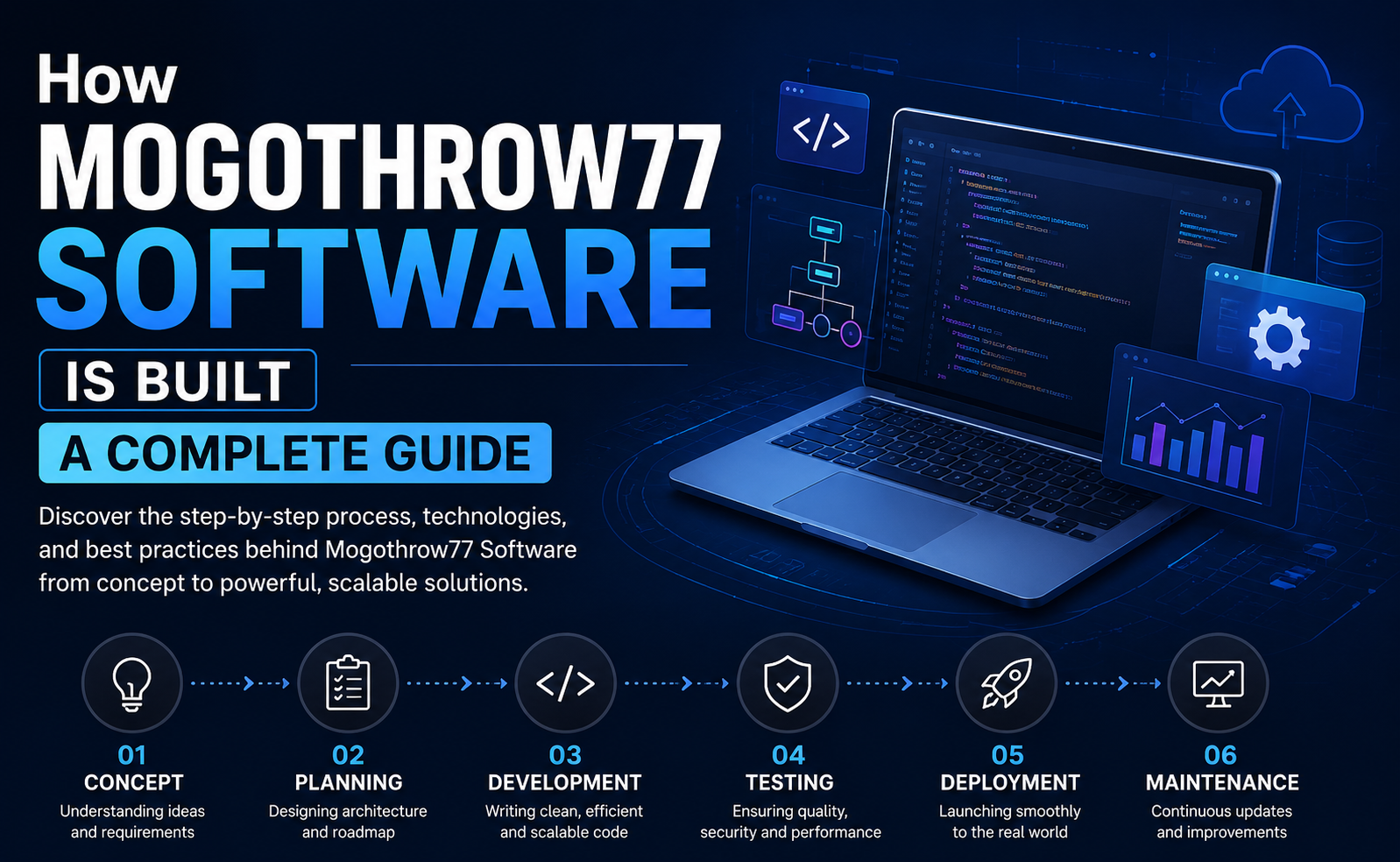
You’ve been searching to understand how Mogothrow77 software is built. You’ve probably noticed something strange. Many articles online make big claims about it. They mention microservices architecture, Rust cores, PostgreSQL backends, and security-by-design principles. But almost none of them link back to a verifiable source. You won’t find an independent code repository you can inspect. You won’t find a consistent story about what the software actually does. Pause here before you go any further, whether you’re evaluating it as a user or researching it for content.
This guide covers two things. First, it shows you how to investigate a claim, like how Mogothrow77 software is built, when the available information doesn’t add up. But second, it explains what a legitimate software build process actually looks like, so you know what real transparency should resemble.
Why the Story Keeps Changing
Search for information on this topic, and you’ll find wildly different descriptions of the same product. But one source calls it a productivity and system-optimization tool. But another describes it as a niche cybersecurity data-aggregation utility with no website and no installer at all. A third frames it as proprietary, closed-source software you install through an .exe or .dmg file. These aren’t just different angles on one product. There are contradictory claims about what the software even is.
That inconsistency is a strong signal. But legitimate software keeps one consistent identity, even when it’s a lesser-known tool. It has a stable description of what it does. You can find out who maintains it. But you can trace where the code or installer actually comes from. The narrative around how Mogothrow77 software is built shifts depending on which article you read. That usually means someone generated the content to rank for search terms, not to document something real.
Red Flags Worth Checking Before You Trust Any Source
Run through this checklist before you accept any claims about a piece of software’s architecture, security model, or build process.
- Does an official, independently verifiable homepage exist? Look past a domain that simply matches the software’s name. Check for real documentation, a support channel, and a changelog with dates and version numbers.
- Does an independent code repository exist? Real projects, even closed-source ones, leave public-facing evidence. Open-source projects show commit history. Proprietary ones publish consistent release notes and a security disclosure policy.
- Do third-party sources back up the claims? Search independent tech review sites, developer forums, and security research blogs. Skip anything that just repeats the original article’s phrases.
- Does the guide ask you to download and run an installer on trust alone? Some articles walk you through running an unfamiliar .exe as an administrator. If they skip a verifiable checksum from an established, cross-referenced source, treat that as a warning sign.
Suppose a piece of software fails most of these checks. Treat any detailed claims about how Mogothrow77 software is built as unverified. You can read them out of curiosity, but don’t base a download decision on them.
What a Real Software Build Process Actually Looks Like
Understanding legitimate development practices helps you spot the difference between authentic technical writing and generated filler. Here’s what real teams typically do, along with the proof you should expect to see.
1. Defining the Problem and Scope
Real projects start with a documented problem statement. You’ll usually find it in a project’s README, pitch deck, or public roadmap. Commit logs, dated blog posts, and public issue trackers let you trace this history yourself.
2. Choosing an Architecture
Teams justify decisions like monolith versus microservices, or SQLite versus a hosted database, with benchmarks and load-testing data.but They also cite specific constraints, such as device type, user base, or budget. Legitimate write-ups reference concrete numbers you can check. Vague claims repeated across unrelated articles don’t count.
3. Security by Design
Teams document genuine security practices. Look for a public vulnerability disclosure policy, third-party security audits, or a CVE history. A source might claim a strong security architecture. But if it gives you no way to verify patches or audits, you can’t confirm that claim.
4. Testing and Iteration
Established products publish release notes that describe what changed and why. These usually tie back to bug trackers or user feedback boards you can browse yourself. A narrative description with no dates, versions, or a way to confirm the timeline looks very different.
5. Distribution and Installation
Trustworthy software travels through channels with verifiable checksums and digital signatures. It carries a track record across app stores, package managers, or well-established download platforms. A standalone website with no independent verification path doesn’t meet that bar.
How to Protect Yourself While Researching Unfamiliar Software
You’re trying to learn how Mogothrow77 software is built because you’re considering installing it. Take these precautions first.
- Don’t download or run any installer based purely on a blog post’s instructions.
- Search the product name alongside terms like “review,” “reddit,” or “scam” to surface independent opinions.
- Run a WHOIS lookup to check whether the domain has a long, consistent registration history.
- Use an isolated virtual machine instead of your main device if you need to investigate further.
- Favor well-known, independently reviewed alternatives when you’re in doubt.
Final Thoughts
Here’s the honest answer to how Mogothrow77 software is built based on everything publicly available, no consistent, independently verifiable account of it exists.But the descriptions circulating online contradict each other.But they trace back to unverified sources instead of an established, cross-referenced project. Skip the unconfirmed claims. Focus instead on the more useful skill: evaluating any unfamiliar software for consistency, independent verification, and real technical evidence.but Do that before you trust a build story, and especially before you install anything based on one.






Leave a Reply